His campaign forced Sinead O'Connor to scrap a 1997 Jerusalem concert. Now he is a Cabinet minister
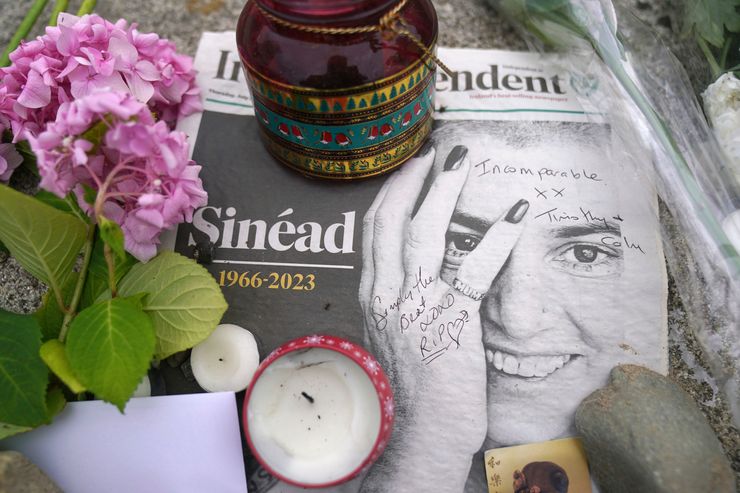
Jul 27, 2023

When death threats forced Irish pop singer Sinead O’Connor to call off a peace concert in Jerusalem in the summer of 1997, a young man named Itamar Ben-Gvir took credit for the campaign against her

JERUSALEM (AP) — Death threats forced Irish pop singer Sinead O'Connor to call off a peace concert in Jerusalem in the summer of 1997. At the time, a young man named Itamar Ben-Gvir took credit for the campaign against her.

Today, he is Israel's national security minister.

The transformation of Ben-Gvir from a fringe Israeli extremist trying to take down O'Connor's coexistence-themed concert to a powerful minster overseeing the Israeli police force reflects the dramatic rise of Israel's far-right.

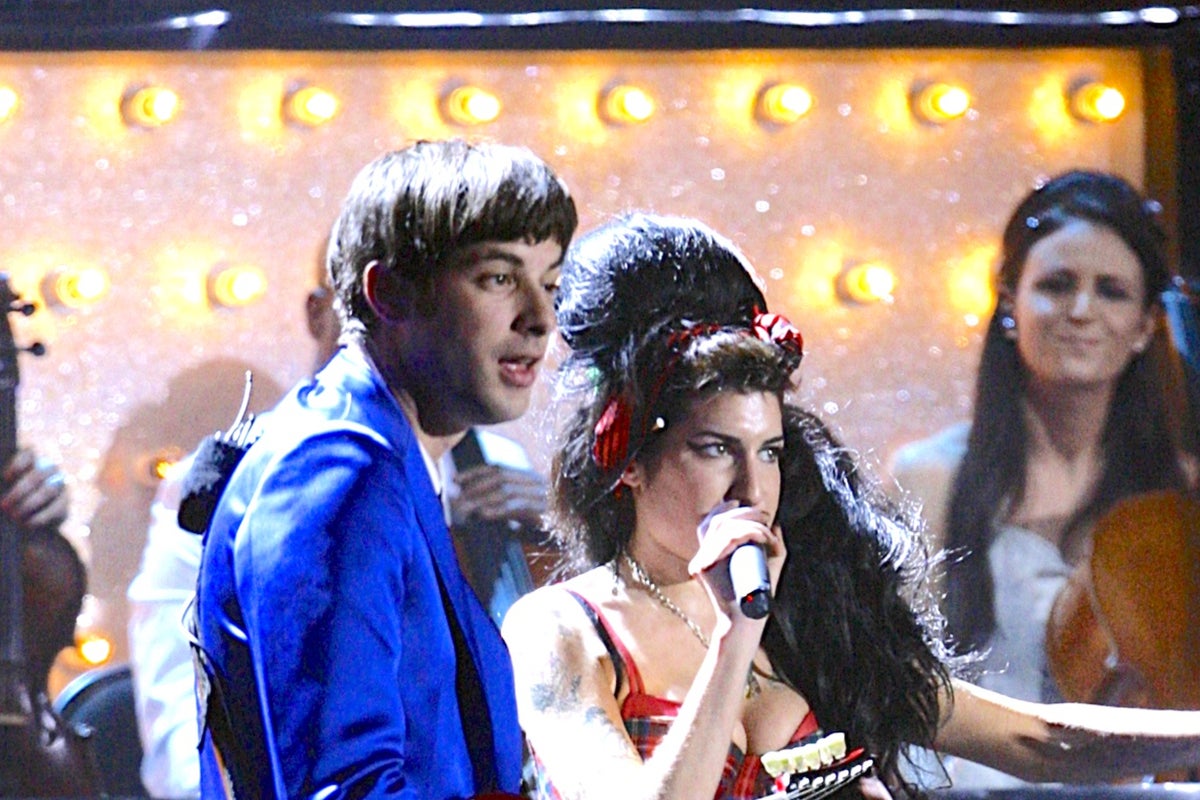
O'Connor, a spirited singer and frequent source of controversy who rocketed to fame in 1990, died on Wednesday in London. While most people remember the star for her hit cover of Prince’s ballad “Nothing Compares 2 U" or the uproar that followed her ripping up a photo of Pope John Paul II on live TV, many Israelis on Thursday recounted an open letter she wrote castigating Ben-Gvir.

Incensed after hearing Ben-Gvir, who was then 21, boast in a radio interview that he had succeeded in scaring her away from Jerusalem, she sent the letter to The Associated Press and other news organizations.

″God does not reward those who bring terror to children of the world,″ O’Connor wrote in a message addressing Ben-Gvir. “So you have succeeded in nothing but your soul’s failure.”

On June 17, 1997, O’Connor — worried for her safety and her children — backed out of the concert organized by Israeli and Palestinian women's groups that had sought to promote Jerusalem as a capital for both people. Named "Sharing Jerusalem: Two Capitals for Two States," the event was set to take place just a few years after the signing of the Oslo Accords, which created the foundation for the Mideast peace process.

Peace in the Holy Land was as controversial then as it is now, and hard-liners like Ben-Gvir oppose any division of Jerusalem. The Palestinians claim east Jerusalem, captured by Israel in 1967, as their capital.

Ahead of her summer concert, British and Irish embassies in Tel Aviv reported receiving death threats against O'Connor. After her cancellation, fans and fellow peace activists expressed anger, surprise and dismay — some sealing their lips with black tape and protesting in the streets against Ben-Gvir and his allies.

Back in 1997, Ben-Gvir was an activist in the Ideological Front, an offshoot of the racist Kahanist movement. Rabbi Meir Kahane’s violent anti-Arab ideology was considered so repugnant in the 1980s that Israel banned him from parliament and the United States listed his party as a terrorist group.

While Ben-Gvir did not take responsibility for threatening O'Connor, he told Israeli radio that his efforts had compelled her to drop out.

"Due to us she is not arriving,″ he said at the time. ″We are calling the pressure we put on her not to arrive a success."

On Thursday, as Israeli media remembered Ben-Gvir's campaign against O'Connor, his office denied that he had ever threatened her.

“Indeed, Minister Ben-Gvir said he would protest against the show,” his office acknowledged. “The show was canceled due to the work of thousands of demonstrators."

Prime Minister Benjamin Netanyahu's government — in which Ben-Gvir is a leading member — is the most right-wing and religiously conservative in Israeli history.

This week, the coalition passed the first part of its deeply contentious program to weaken the Supreme Court, a plan that has prompted mass street protests and plunged the country into its worst domestic crisis in years.

On Thursday, Ben-Gvir visited Jerusalem's most sensitive holy site — a contested hilltop compound revered by both Jews and Muslims. The visit, while permitted under longstanding arrangements, was seen by Palestinians and Muslim countries as a provocation given Ben-Gvir's history.

Ben-Gvir, now 47, was convicted in his youth of inciting racism against Arabs and barred from serving in the Israeli army because he was considered too extremist. Until recently, he hung a portrait in his home of an Israeli gunman who killed 29 Palestinians in a West Bank mosque in 1994.

As national security minister, Ben-Gvir has repeatedly sparked backlash over his anti-Arab rhetoric and stunts. He has pushed for the creation of a national guard that critics fear could endanger Israel's Palestinian minority and ramped up Palestinian home demolitions in the contested capital, among other things.

O'Connor's relationship to Israel only become more fraught following the botched concert. She became as a supporter of the Palestinian-led campaign that calls for boycotts, divestment and sanctions against Israeli businesses, cultural institutions and universities. After the 2014 Gaza war, O'Connor heeded the campaign's calls to pull out of a concert near Tel Aviv.

But the cancellation of her 1997 Jerusalem concert was remembered the most in Israel — a country in turmoil as Netanyahu and Ben-Gvir press ahead with their divisive, far-right agenda.

In her letter to Ben-Gvir, O'Connor described being haunted by televised images of Israelis and Palestinians beating each other in the streets of the holy city of Jerusalem.

“I felt saddened and frightened," she wrote. "I asked God then ‘How can there be peace anywhere on earth if there is not peace in Jerusalem?’"

She then added: "I ask you that question now Mr. Ben Gvir.”

More News

The far-right just lost. Twice.

Oct 26, 2026

The far-right just lost. Twice.

Supporters of Serbia’s Students’ List movement celebrate in Belgrade on October 26, 2026. | Milos Milanovic/AFP via Getty Images This story appeared in Today, Explained, a daily newsletter that helps you understand the most compelling news and stories of the day. Subscribe here. Vox isn’t typically in the business of covering elections in far-flung locales like the central Balkans. (No offense whatsoever to anyone from the central Balkans!) But on Sunday, an insurgent student-backed movement in Serbia successfully toppled the country’s ruling right-wing political machine, creating an unexpected opening for democratic reform.  Then, in another upset halfway around the globe, Brazilian voters reelected incumbent President Luiz Inácio Lula da Silva over his far-right challenger, Flávio Bolsonaro. “Democracy always, dictatorship never again,” Lula said in his victory speech. That’s two big repudiations of the nationalist right in 24 hours. Not quite enough to declare a trend, maybe, but sufficient to remind us that there’s still hope for the world’s embattled democratic institutions.  More than that, these results offer evidence of something that sounds naive and Pollyannish in our current moment, but can (apparently!) still prove true: Organizing can be a powerful force for electoral change — both abroad and maybe here at home. Go a little deeper View Link To be fair, the two elections differed considerably, and I don’t want to suggest it’s all sunshine and democratic renewal ahead for Brazil and Serbia. Bolsonaro is refusing to concede, for instance. And in Serbia, the victorious Student List still has to stand up a government, a prime minister, and a full policy platform — something the nascent movement has never done before.  But academics and elections-watchers in both countries have credited the results in large part to mass protests and grassroots organizing that helped mobilize unexpected numbers of voters. Serbian students began their movement in 2024, following the partial collapse of a railway station that killed 16 people. The government’s failure to fully explain the cause of the collapse — or hold anyone responsible — fueled months of marches, protest bike rides, and other demonstrations. That movement eventually grew into the Student List: an opposition electoral slate that fielded 250 candidates in Sunday’s parliamentary elections.  The story in Brazil is quite different. Lula, the country’s leftist president, was actually poised to lose. Brazil uses a two-round popular vote to elect its president, and if no candidate secures more than half the vote in the first round, then the top two candidates proceed to a runoff election. Lula placed second in that first vote, after Flávio Bolsonaro, the son of former Brazilian President Jair Bolsonaro and the heir to his father’s far-right political movement.  To many Brazilians, that second-place finish served as a kind of wake-up call. “No runoff campaign in Brazil has ever brought so many people to the streets and onto social media,” Guilherme Casarões, an associate professor of Brazilian studies at Florida International University, wrote in an analysis of the surprise results. One WhatsApp channel dedicated to turning voters out for Lula grew to nearly 11 million followers, up from just 50,000 after his first-round loss.  Looking at these projects abroad, I’m struck that American pro-democracy movements like No Kings haven’t achieved that kind of influence. Arguably, that’s in part a consequence of their failure to turn protest energy into actual political organizing — things like registering voters, knocking on doors, and fielding candidates.  But there are some signs that may be shifting. No Kings has lately pivoted its focus, for instance, from mostly organizing protests to urging Americans — of both parties — to vote in the midterms. And Indivisible, one of the groups behind the movement, claims that early voting surged during the latest protests in the zip codes where they occurred. It’s not exactly a central Balkan moment, but maybe it’s a hint of things to come. Elections can surprise you, after all. Just ask a Serb or a Brazilian.  One link for later ➨ Leave your big life decisions to chance. (Sort of.) A team of researchers invited people to make a big life decision by flipping a coin and then tracked their happiness with the outcome. They found that, of the people who obeyed the results of the toss, the ones who changed something big were overwhelmingly happier. That doesn’t literally mean we should all resort to coin tosses, but it should tell us something important: We often tend to be too cautious about making major changes.  Before you go… Did you know…that in the 1870s and ’80s, spectators flocked to Madison Square Garden for long-distance walking competitions? Athletes walked up to 600 miles in six days, just going round and round the stadium.  Today’s trivia: Which New Jersey city was the first predominantly white community in the US to vote in favor of school integration? (You can find this and other brain puzzles in Vox’s daily crossword. Look for the answer in tomorrow’s edition.) Yesterday’s trivia: Last week we asked you for the radioactive noble gas with the chemical symbol Rn. That would be radon, once a trendy (deadly) ingredient in quack medicines.

Central News Today

Central News Today breaks down complex issues with unique perspective, bringing high-quality journalism to millions of readers around the world.

NEWSLETTER