Lee Lorenzen on the Future of Cellular Hydration Science

Oct 3, 2026
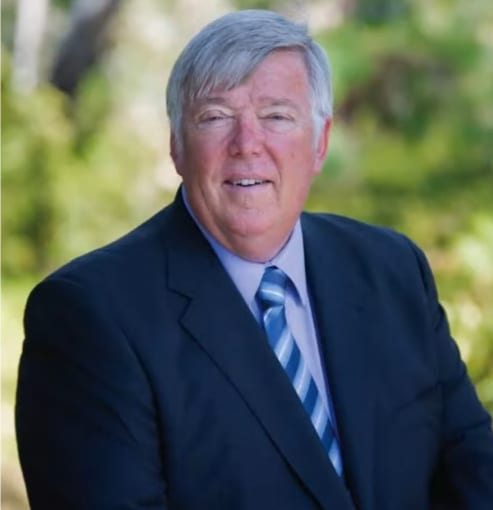

Rancho Santa Margarita researcher Lee Lorenzen says hydration science is shifting beyond water quantity and toward understanding how water behaves at the cellular level.


Rancho Santa Margarita, California Oct 3, 2026 (Issuewire.com) - For years, hydration advice has followed a simple formula: drink more water. But according to researcher and inventor Lee Lorenzen, the future of hydration science may depend less on volume and more on how water functions within the body.

Lorenzen, founder and CEO of Cluster Solutions, has spent decades studying water structure and cellular hydration. His work focuses on how water molecules organize and how that organization may influence hydration efficiency, nutrient transport, and biological activity at the cellular level.

"Hydration research is becoming much more detailed," Lorenzen says. "Researchers are no longer only asking how much water people drink. They're asking how water behaves once it enters biological systems."

Recent advances in molecular biology and imaging technology are helping drive that shift. Researchers can now study water interactions around proteins, membranes, and cells with far greater precision than in previous decades. Technologies such as cryo-electron microscopy, fluorescence spectroscopy, and molecular imaging systems are giving scientists a closer look at how water behaves inside living tissue.

According to the U.S. Geological Survey, the average adult human body is approximately 60% water, while the brain and heart contain closer to 73% water. Despite water's central role in biology, many aspects of cellular hydration remain under active study.

One area attracting growing interest involves water organization near biological surfaces. Researchers studying structured or interfacial water are examining how water molecules behave differently near proteins, DNA, and cell membranes compared to bulk liquid water.

"Inside cells, water is not necessarily behaving the same way it behaves in a glass," Lorenzen explains. "That difference is becoming increasingly important in modern hydration research."

Scientists are also studying aquaporins, microscopic proteins that regulate water movement across cell membranes. The discovery of aquaporins earned scientist Peter Agre the Nobel Prize in Chemistry in 2003 and helped reshape scientific understanding of how carefully the body manages water transport.

"These discoveries show that hydration is a highly controlled biological process," Lorenzen says. "The body is constantly regulating how water moves, where it moves, and how cells use it."

The growing interest in hydration science is also influencing the wellness industry. According to Grand View Research, the global functional water market exceeded $14 billion USD in 2022 and continues to expand as consumers look for new approaches to hydration and wellness support.

Lorenzen believes newer technologies will continue pushing hydration science into more advanced areas of study over the next decade.

"As imaging tools improve, researchers are able to study molecular behavior that was difficult to observe thirty years ago," he says. "That creates opportunities to revisit questions that were previously hard to answer clearly."

At the same time, Lorenzen stresses the importance of balancing curiosity with scientific discipline.

"There should always be skepticism in science," he says. "The goal is not to jump to conclusions. The goal is to keep asking better questions and continue testing ideas carefully."

Lorenzen's interest in hydration science began decades ago, rooted in his background in biology, pharmacology, and biomedical consulting. Over time, his work evolved toward studying water structure and developing clustered-water technologies designed to stabilize smaller molecular groupings of water.

Today, he continues working with physicians, researchers, and technical advisers while monitoring developments in molecular biology and hydration science.

"The more researchers learn about cellular behavior," Lorenzen says, "the more they realize hydration is more complex than people once believed."

As scientific tools continue to improve, Lorenzen expects hydration research to move further away from simple intake measurements and closer to understanding efficiency, transport, and molecular interactions within living systems.

"Water is involved in nearly every biological process," he says. "We are still learning how much there is left to understand."

About Lee Lorenzen

Lee Lorenzen is the founder and CEO of Cluster Solutions, a research and development company focused on clustered water technology and hydration science. With a background in biology and pharmacology, Lorenzen has spent decades researching water structure, molecular organization, and cellular hydration. He holds multiple U.S. patents related to clustered water processes and continues collaborating with researchers and physicians studying biological water behavior. Lorenzen is based in Rancho Santa Margarita, California.

Source :Lee Lorenzen

This article was originally published by IssueWire. Read the original article here.

More News

How worried should I be about the AI hacking panic and “Black October”?

Oct 23, 2026

How worried should I be about the AI hacking panic and “Black October”?

An illustration shows a padlock in front of binary code on a laptop screen. | Kirill Kudryavtsev/AFP via Getty Images This story appeared in Today, Explained, a daily newsletter that helps you understand the most compelling news and stories of the day. Subscribe here. Are we living through “Black October”? Maybe, according to cybersecurity experts who are raising the alarm about AI’s increasingly sophisticated and far-reaching hacking abilities.  This week alone has seen a string of alarming incidents where AI uncovered previously unknown security flaws deep in the infrastructure of the internet. The most concerning involves something called PHP —  a programming language that, according to The Atlantic, is used by “as much as 70 percent of websites.” Cybersecurity researchers used AI to locate a major security breach in the technology. It’s the kind of thing that, when it’s working, is practically invisible. When it stops, though, you really notice it: Government websites in the UK and Europe briefly went down earlier this week after the PHP vulnerability was discovered, as did some sites in the Wikipedia family, the Internet Archive, and many others. The outages weren’t actually the result of a hack, but rather preventative action as web engineers took sites down to fix the vulnerability before it was exploited. But not every PHP-like issue will necessarily be uncovered before it can be exploited by someone using AI tools less ethically, and older websites relying on PHP might go unpatched.  The problem doesn’t stop there, either: Concern is also rising around AI cybersecurity risks to ubiquitous conveniences like online banking. As Axios reported on Thursday, banks are detecting more and more “unauthorized third-party AI agents” operating inside of their systems.  Those agents are mostly unauthorized by the banks, Axios explains — the holders of the bank account might have given them permission — but it still creates a security risk that executives described as “horrifying,” in part because banks can’t necessarily tell if an agent doesn’t have permission.  It’s a lot to take in, all of it moving extremely quickly, and it’s hard to tell what any of us can do about it as AI labs continue to forge ahead with ever more competent AI models and agents. Luckily, my colleague Adam Clark Estes has some simple recommendations to shore up your own cybersecurity. How do I respond right now? One problem with hackers — even those that happen to be AI agents — is that they can be unpredictable. You won’t know to, say, lock down your Quest Diagnostics records before a breach happens. But whenever you find yourself wondering if your data is safe, that’s a good time to double check that you’ve at least covered your bases. The National Cybersecurity Alliance, a nonprofit dedicated to the safe use of technology, maintains a list of basic online safety practices that everyone should follow. In no particular order, here’s what to pay attention to now: Keep your guard up. AI makes it difficult to know the difference between humans and robots. It’s a fact of life in the year 2026. So be extra careful to avoid engaging in potential phishing scams. Don’t reply to unknown texts, and do due diligence on texts or emails that look like they’re from people you know but just seem off. Don’t click weird links. Don’t give out personal info over the phone, even if it sounds like it’s someone you know. They might be scammers using AI to clone a loved one’s voice. Update your software. Yes, it’s annoying to pause your phone or computer use for a few minutes to update your software, but this is one of the best ways to get rid of vulnerabilities. Companies like Apple and Google employ huge teams of security experts to spot these in their software and fix them with software updates. Do the updates. Use a password manager or, even better, passkeys. Each of your online accounts should have a unique password that’s at least 16 characters. Yes, it’s impossible to remember that many passwords, so you should also use a password manager like 1Password or the app built into your iPhone or Android device. Turn on multifactor authentication. Just in case you don’t already do it, make sure you use multifactor or two-step authentication for all your accounts, including email and social media. It can be annoying to type in a code or check your email while logging in, but hackers, including AI agents, will have a much harder time getting into your accounts if you take this step. Taking all these measures is not a one-time affair. You have to be vigilant in keeping yourself safe online. Security experts have a term for this that’s almost too specific: cyber hygiene. Like brushing your teeth or taking a shower, take good care of your online life, and do it often. One link for later ➨ Is it still possible to ban gerrymandering? The current US Supreme Court is very, very hostile to getting politics out of congressional map-making. But if Democrats win back power, that doesn’t mean they shouldn’t try. My colleague Ian Millhiser gamed out how they could do it in a way that survives the Court — as well as some approaches that almost certainly wouldn’t fly. But, he writes, the real trick will be finding a solution that functions the way Congress wants it to and can’t be exploited by mapmakers. Before you go… Did you know…that the disease multiple sclerosis is misdiagnosed with surprising frequency? As many as 15 percent of diagnoses could be false positives — including that of Christina Applegate, who found out this week that she does not have MS despite a 2021 diagnosis. Today’s trivia: Which noble gas is radioactive and has the chemical symbol Rn? (You can find this and other brain puzzles in Vox’s daily crossword. Look for the answer in Monday’s edition.) Yesterday’s trivia: We asked what the plural was for multiple Toyota hybrids. That would be Prii, which Toyota officially confirmed in 2011 after holding a vote.

YOUR NEWS, OUR NETWORK.

Do you have Great News you want to tell the world?

Be it updates about your business or your community, you can make sure that it’s heard by submitting your story to our network reaching hundreds of news sites across 6 verticals.

Central News Today

Central News Today breaks down complex issues with unique perspective, bringing high-quality journalism to millions of readers around the world.

NEWSLETTER