Geeky News Talks About Preparing for the UK's Telecom Revolution and Navigating the 2025 Switch-Off

Oct 11, 2023


Surrey, United Kingdom Oct 11, 2023 (Issuewire.com) - Geeky News is pleased to announce the release of its latest article, "Preparing for the UK's Telecom Revolution and Navigating the 2025 Switch-Off." This article examines the upcoming changes in the telecommunications industry in the United Kingdom and provides important advice for individuals, businesses, and organisations.

The UK's telecommunications industry is on the cusp of a groundbreaking transformation. By December 2025, it will replace traditional analogue phone networks, like the public switched telephone network (PSTN) and integrated services digital network (ISDN). These networks will be replaced by more advanced, efficient, and versatile communication technologies.

Geeky News examines the reasons behind this transformation. The move from traditional phone lines to digital networks using Internet Protocol (IP) over fibre-based services is driven by the need for technology that can keep up with our fast-changing digital world.

As the 2025 deadline approaches, the clock is ticking for individuals, businesses, and organisations to adapt. The article discusses the two primary options available for a seamless transition: voice over Internet protocol (VoIP) and mobile networks.

The article highlights that this change is not just about improving technology, but about accepting a future where communication is easier, cheaper, and more dependable. The transition to session initiation protocol (SIP) trunking will affect many services and organisations, including alarms, CCTV systems, and door entry products.

For contact centres, this transition represents a significant transformation. Technology upgrades would be required, which might prove to be expensive. However, it will also offer cost savings, scalability, enhanced features, remote work opportunities, improved customer experience, redundancy, and reliability. VoIP and SIP Trunking also provide monitoring and analytics tools for optimising operations.

The article emphasises the need for careful planning to prevent disruptions during the transition. This includes migrating phone numbers, training agents on new technology, and conducting thorough testing. It also recommends trusted testing service providers such as Occam Global. Contact centres must ensure compliance with industry regulations and maintain robust security measures to protect customer data.

Openreach has stopped offering PSTN and ISDN services to new customers since September 2023. It is important to start preparing early to make sure service continuity is maintained. Businesses are advised to review and identify all hardware and functions connected to phone lines.

The article underscores the market opportunities for smaller telecom service providers. They can offer innovative connectivity solutions to businesses as the UK transitions to efficient fibre technologies.

Geeky News advises readers to stay informed, be proactive, and embrace the benefits of the digital future of telecommunications for a smooth transition. Choosing either VoIP or SIP trunking provides cost savings, improved functionality, and future-proofing for your telecom infrastructure.

For more details, read the full article on Geeky News: https://www.geekynews.co.uk/uk-telecom-revolution-2025/

Media Contact

Geeky News


[email protected]

+44 20 3800 1212

Parallel House, 32 London Road Guildford, Surrey

https://www.geekynews.co.uk/

Source :Geeky News

This article was originally published by IssueWire. Read the original article here.

More News

Why Trump saved Jensen Huang

Nov 23, 2026

Why Trump saved Jensen Huang

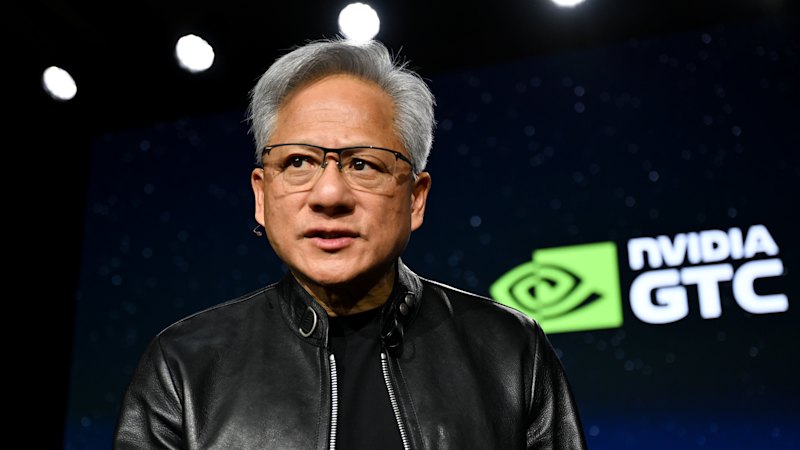
Donald Trump greets Nvidia CEO Jensen Huang outside the West Wing of the White House on September 29, 2026. | Kevin Dietsch/Getty Images This story appeared in The Logoff, a daily newsletter that helps you stay informed about the Trump administration without letting political news take over your life. Subscribe here. Welcome to The Logoff: Donald Trump is personally intervening to keep the AI industry afloat.  What happened? Jensen Huang, the recently ousted Nvidia CEO, is back atop the company as of Monday morning, after Trump dialed into an Nvidia board meeting over the weekend to offer “assurance” about legal and national security concerns around Huang.  Huang’s restoration — after he resigned following reports about multiple alleged affairs, including one with a possible Chinese spy — is a remarkable reversal of fortune. It also marks an unprecedented, at least in the modern era, level of direct White House interference with corporate America. What’s the context? This is the outcome that Trump, Elon Musk, and many of his other allies on the tech right have been agitating for since Huang stepped down not even two weeks ago.  As head of Nvidia, Huang has become — apparently quite literally — the AI industry’s “indispensable man.” In addition to being the leading maker of advanced AI chips, Nvidia is sometimes referred to as the “central bank of AI” for the financing schemes it uses to keep major labs afloat. That gives it a great deal of sway over better-known companies like OpenAI and Anthropic.  Huang, by some in the industry and on Wall Street, was considered central to those efforts. Markets jumped dramatically Monday morning on news of his return.  Why does this matter? His return is a boon for the stock market and the AI industry just as both were starting to stumble, and one that may temporarily fend off the “perfect storm” that my colleague Eric Levitz described last week. It’s also an exceptional moment of naked self-interest by Trump, choosing the market’s continued well-being and his personal friendship with Huang over real national security concerns about Huang’s leadership at Nvidia.  What now? The Huang scandal won’t end here. He’s set to testify in the Senate next Thursday, and that’s likely just the start of the congressional oversight he can expect with incoming Democratic majorities in both chambers. After today, where that will lead is anyone’s guess. And with that, it’s time to log off… Hi readers, happy Thanksgiving week! If you’re getting ready to travel for the holiday, Vox’s Unexplainable podcast just tackled one of the most pressing questions out there: Should you recline your seat on a plane?  In typically excellent Unexplainable fashion, they consulted science and moral philosophy to find the answer, with some help from the New Yorker’s Joshua Rothman. You can listen to the full episode here. Have a great evening, and we’ll see you tomorrow!

Can the Nvidia scandal possibly get weirder?

Nov 23, 2026

Can the Nvidia scandal possibly get weirder?

President Donald Trump presents the National Medal of Science to Jensen Huang, CEO of Nvidia, at an October 2026 event in Washington, DC. | Kent Nishimura/AFP via Getty Images This story appeared in Today, Explained, a daily newsletter that helps you understand the most compelling news and stories of the day. Subscribe here. It is truly wild that an executive with several reported affairs, a reputation for violently berating his staff, and a trail of deeply questionable deals could be invited back for a second go-round. Then again, if President Donald Trump managed it…then why not his buddy, Jensen Huang? Huang, the ex-ex-Nvidia CEO, is officially back at the helm of the giant chipmaker he cofounded 35 years ago — and all his past indiscretions have been forgiven, if still under investigation. And the stock market loves it, with investors joining Trump in betting that Huang’s singular business talents will make up for the considerable chaos he’s personally caused already. Huang, you’ll recall, resigned less than two weeks ago following reports that he’d had an affair with a woman suspected of spying for China. Whether she actually was a spy is still an open question. But other reporting has since cast lots of doubts on different aspects of Huang’s conduct and character. Like: reports that Nvidia, under Huang’s watch, may have indirectly sold restricted chips to China. Or that Huang allegedly told an employee he’d rip off his head and “pee on [his] brain,” among a number of other, er…inventive humiliations.  And yet! On Sunday, Nvidia’s board voted unanimously to reinstate him, apparently at the request of Trump himself. “I spoke to them. Let me just put it that way. And I convinced them,” Trump told CNBC in a Monday morning segment. Key to that decision: The president’s personal assurance that “the United States Government has no reason to believe that Jensen’s return to NVIDIA poses any risk to National Security.” It’s an extraordinary turn in an extraordinary story that we very likely have not seen the end of just yet. Because the fight over Huang is also a fight over how America can continue dominating the high-stakes field of artificial intelligence. Go a little deeper View Link Before the scandal, before the spying allegations, before all the drama…Huang was already a central player in the bitter debate over selling AI chips to China. The US restricts sales of some kinds of cutting-edge chips for fear they could help China develop more advanced AI. Huang has spent months telling Trump he should loosen those restrictions. (It’s not particularly difficult to imagine why.) But as my colleague Andrew Prokop breaks down today, lawmakers, AI executives, and officials within Trump’s own administration are not sold. In fact, they’re deeply divided over whether loosening sales restrictions on AI chips would ultimately advance or erode America’s AI dominance.  In one camp are the so-called “China hawks,” who argue that selling powerful chips to China would very likely accelerate its AI development at America’s expense. In the other camp are Nvidia and its allies in Trump’s orbit. They argue that America is better off selling China some chips — and keeping Chinese developers dependent on American technology — than abandoning that market to the Chinese competition.  This divide doesn’t map neatly onto party lines. While most prominent Democrats fall toward the hawkish end of the spectrum, the China question has divided Trump’s coalition.  Many GOP lawmakers and some of Trump’s top officials — including Secretary of State Marco Rubio and Treasury Secretary Scott Bessent — side more or less with Democrats on this. So does much of the national security establishment and the AI safety movement.   Meanwhile, Commerce Secretary Howard Lutnick and former White House AI adviser David Sacks have made the case for keeping Chinese developers hooked on American chips. And Trump has increasingly favored their approach, growing generally more conciliatory toward China since his first term. Last year, his administration loosened restrictions on some Nvidia chip sales to China. (And last week Trump was, for what it’s worth, photographed holding Xi Jinping’s hand on an escalator.) But Huang’s return won’t settle the China AI argument for long, regardless of Trump’s influence. When Democrats take control of Congress in January, they’ll gain the power to launch more rigorous investigations — including into Nvidia. And at least a few Republicans also say they have questions.  “Who in our government weighed in?” asked Sen. John Curtis (R-UT) in a post on X, referring to Huang’s reinstatement. “What did they tell the board? And on what basis did the board conclude there was no risk?” One link for later ➨ Indulge your inner child. In the US, adults without kids now officially buy more toys than adults with children. That fact initially struck me as odd, but…there’s a neurological justification! When people of any age play with toys, the part of the brain that governs the stress response calms down. “The drive to play is actually biologically hardwired into our subcortex,” one expert told Vox. Before you go… Did you know…that female turkeys can basically clone themselves? Occasionally, the eggs of female turkeys will spontaneously develop into embryos without any sperm. This process is called parthenogenesis. Today’s trivia: Which 19th-century author and activist is known as “the mother of Black feminism”? (You can find this and other brain puzzles in Vox’s daily crossword. Look for the answer in tomorrow’s edition.) Yesterday’s trivia: Last week we asked you for the name of the independent federal agency currently chaired by Kevin Warsh. That would be the Federal Reserve System — a.k.a. the Federal Reserve or the Fed — which sets monetary policy in the US.

YOUR NEWS, OUR NETWORK.

Do you have Great News you want to tell the world?

Be it updates about your business or your community, you can make sure that it’s heard by submitting your story to our network reaching hundreds of news sites across 6 verticals.

Central News Today

Central News Today breaks down complex issues with unique perspective, bringing high-quality journalism to millions of readers around the world.

NEWSLETTER