Most Recent
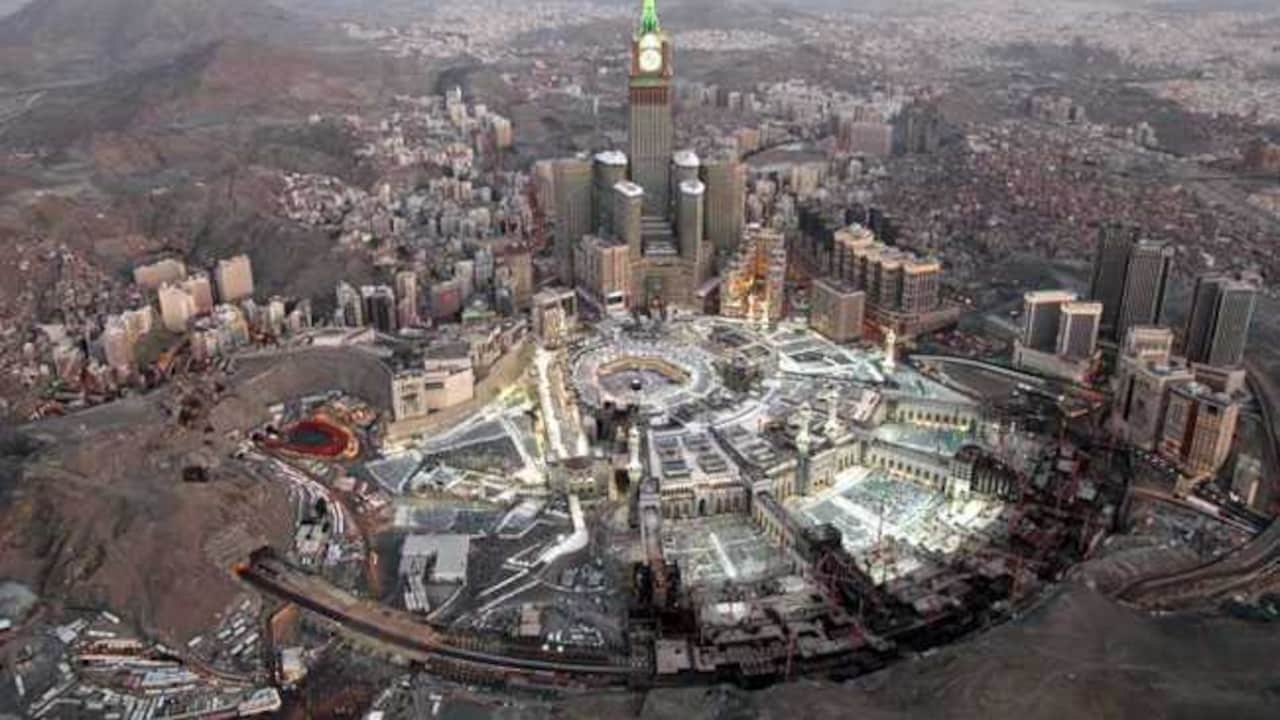
Saudi Says Missiles Intercepted Over Mecca, Medina, Houthis Call It "Huge Lie"
This comes hours after the agency warned of "potential danger" for four of its western provinces, including Mecca.
More Lula, or back to the Bolsonaros? Brazil votes in cliffhanger
RIO DE JANEIRO, Brazil - Brazilians head to the polls on Sunday facing a stark choice: another four years under veteran leftist Luiz Inacio Lula da Silva, or a return to the right under Senator Flavio Bolsonaro.
China’s US$3.5 trillion stock rout deepens as profits sink, major stimulus stays elusive
Chinese leaders are in no rush to jump-start an economy that is slowing but at a tolerable speed
China’s US$3.5 trillion stock rout deepens as profits sink, major stimulus stays elusive
Chinese leaders are in no rush to jump-start an economy that is slowing but at a tolerable speed
'Never Let Them Come In': Trump Blames Migrants For Unrest In France; Calls Libya, Yemen 'Shithouse Countries'
Donald Trump calls Libya, Yemen, Haiti and Somalia ‘shithouse countries’ and blames migrants for unrest in France amid protests over education funding and living costs.

IMD weather alert today: ‘Red’ alert for heavy rains in Keralam, Tamil Nadu, ‘severe’ cyclone to hit Andhra on Oct 28
According to the latest IMD update, the weather system is very likely to move nearly southwards today, intensify into a Deep Depression, and then gradually recurve west-northwestwards over the Eastcentral and adjoining Southeast Bay of Bengal by October 26 morning.
Fresh clashes rock France as protesters march on
Clashes erupted across France on Saturday as protesters took to the streets, a week after marches that degenerated into violence and prompted a firm security backlash from President Emmanuel Macron, who is scrambling to restore order. Police arrested nearly 1,000 people as officers faced "an extremely elevated level of violence" from black-clad "ultra-left" extremists, Interior Minister Laurent Nunez said. Riot police squads fired tear gas at protesters in the capital as well as in Marseille, Lyon, Bordeaux, Lille, Toulouse, Montpellier and Nantes. Two people were "seriously" injured, Nunez said: one man in Toulouse, who reportedly had fingers blown off, and another person in Clermont-Ferrand. He did not give details of either case. Authorities had deployed 70,000 security personnel across the country for the new marches, called to protest the cost of living. The violence came a week after rioting that saw public buildings vandalised, hundreds of shops looted and 2,700 people arrested, casting a pall over the country six months before an election to choose Macron's successor. Nunez said Saturday's outcome was more "positive" than a week ago, with more police on the streets acting more rapidly, conducting more pre-demonstration checks and better protecting businesses. But there was widespread anger at the government over a protest crackdown viewed as an assault on the right to protest. Saturday's demonstrations drew between 410,000 and 800,000 people across the country, according to different estimates by authorities and the organising CGT union. The main Paris march had between 110,000 and 250,000 attendees, according to those sources. Macron's government has ordered police to prevent protesters reaching city centres, where shops are concentrated, and in Paris and some other cities, partial curfews were imposed in certain urban zones. The French president had ordered non-union demonstrations be banned as "illegitimate". In Paris, where many shops had boarded up windows to prevent looting, and the Louvre and the Musee d'Orsay museums shut for the day, the main demonstration passed off largely peacefully. The march had been pushed to the capital's southeast rim under a last-minute order by authorities. Afterwards, though, clashes broke out as the crowd was dispersing, with Nunez blaming "500 rioters" at the back of the march. AFP journalists saw police charge several times, blasting tear gas and using batons against some, mostly young, protesters. "They were just taking people down, you know, beating protesters," one demonstrator bleeding from a baton blow to his face, who gave his first name as David, told AFP. Thousands of protesters in the western city of Nantes broke through lines of police firing tear gas and a water cannon to reach the city centre, an AFP journalist witnessed. Emma, 23, who came out in the northwest city of Rennes, denounced the bans on demonstrations and the "repression" of protests by high school students demanding better learning conditions. Marching in the rain at the head of the protest in the northern city of Lille, 47-year-old Delphine insisted: "Neither the president, nor the weather will stop me from demonstrating." In Lyon, police used tear gas to disperse around 1,000 people gathered in the south of the city. "If they ban protests, that means we're heading more and more towards a regime that is fascist, that is dictatorial," said one 20-year-old protester in Lyon, who gave only his first name, Silem. In the southern cities of Cannes and Montpellier, far-right activists clashed with "ultra-left militants", in what authorities said was an unprecedented development. There was looting on the sidelines of the marches in Marseille and Grenoble, police said. The Yellow Vests, who staged disruptive protests against Macron eight years ago, called for more demonstrations on October 31 for "the freedom to protest". Far-left presidential candidate Jean-Luc Melenchon, who marched in Paris, said the movement "is going to repeat itself every week". Tensions were heightened by a rally in the city of Orleans by far-right leader Marine Le Pen's National Rally party to kick off her campaign for the presidential election. Thousands of counter-protesters chanting anti-fascist slogans marched in the city. The unrest across France highlighted the febrile political atmosphere ahead of the vote, in which Le Pen leads in surveys. Inflation in France, particularly affecting the cost of fuel, has surged since the start of the Middle East war in February. "I'm going to try and instill a bit of optimism," said the four-time presidential hopeful, who has cast herself as the law-and-order candidate, ahead of her first major campaign speech on Sunday. Protests have also broken out in Italy, Belgium, Spain and Portugal over different issues, yet with some overlap on inflation and education problems. (AFP) Edited by Tony Sabine
Mass rallies for Lula and Bolsonaro on eve of key vote
Brazilian President Luiz Inacio Lula da Silva and Senator Flavio Bolsonaro wrapped up their campaigns on Saturday ahead of Sunday's presidential runoff vote, mobilising supporters and making a final push for undecided voters. The two candidates have remained neck and neck in polls following a stronger-than-expected performance by the right-wing senator in the first round. On Saturday, a CNT/MDA poll showed the senator with a 1.3-point lead. Lula, who is seeking a fourth non-consecutive term, kicked off his last day of campaigning with a march along Rio de Janeiro's iconic Copacabana beach, where thousands of supporters joined the leftist incumbent under a blazing sun. "We're going to win the election for one simple reason: it's true that the people want change, (but) they want to move forward. They don't want to go backward," Lula told journalists before the rally. Later, the president led another march in Sao Paulo, passing along Paulista Avenue, a traditional venue for political demonstrations in Brazil's largest city. "It's so exciting to see everyone here. This is the kind of energy we want for Brazil. Brazil is ours," said Gisele Passos, a 61-year-old businesswoman at the Sao Paulo rally. For many Lula supporters, the rallies carried a bittersweet undertone. The 80-year-old president and former union leader is widely expected to be making his final bid for office, lending the campaign's closing events the feel of a farewell tour. "He's one of a kind. He has had an incredible, remarkable, and hard-fought journey. We're very proud of that," said Olga Leal, a 62-year-old retiree in Sao Paulo. Bolsonaro, meanwhile, joined a motorcycle caravan in Belo Horizonte, the capital of Minas Gerais, a key battleground state. No candidate has won the presidency without carrying Minas Gerais since the country's return to democracy in the 1980s. The senator led Lula by around five percentage points in the state in the first round. "The time is almost here. There are only a few hours left before we shape the future of our nation for the next 30 or 40 years," said the lawmaker, the eldest son of former President Jair Bolsonaro, in a social media video. He later took part in a campaign march in his home state of Rio de Janeiro, which he has represented in the Senate since 2019. The younger Bolsonaro was first backed by his father to run for the presidency last December. The former president was sentenced to over 27 years in prison for plotting a coup after losing the 2022 presidential election to Lula. On Friday, Lula and Bolsonaro met for a final debate on TV Globo, the country's main free-to-air television channel, where they sparred over the cost of living and traded personal attacks. (Reuters) Edited by Tony Sabine

Ukraine says Starshield back to normal after week-long disruption, Elon Musk accuses Kyiv of violating Starlink’s terms
Starlink and Starshield speeds in Ukraine returned to normal by Saturday, improving frontline logistics and communications. The previous week’s speed cap had disrupted military operations. Musk said it was imposed after Ukraine used Starlink for offensive drone strikes.
Houthis claim new strikes on Saudi Arabian targets
Yemen's Houthis launched fresh attacks on Saudi Arabia and the seat of Yemen's internationally recognised government on Saturday after blaming the kingdom for strikes that the Iran-backed group said killed 17 people. Saudi Arabia and the government it backs in Yemen have come under sustained attack in recent weeks from the Houthis as a years-long truce broke down in the summer, shifting the focus of the wider US-Iran war that erupted in February. Over the past 24 hours, the Yemeni fighters said they targeted three Saudi airports including the international airport in capital Riyadh, energy installations, a pipeline and an air base. Military spokesman Yahya Saree said the group launched missiles at "King Khalid International Airport in Riyadh, the capital of the Saudi enemy, in two phases", the airports in Dammam in the east and Najran in the south. The group also launched attacks on the southern Khamis Mushait air base as well as "crude oil pumping stations and the crude oil pipeline from east to west". The Saudi civil defence agency said it had also responded to falling debris in the Mecca and Medina regions on Saturday after intercepting two Houthi missiles. The Houthis denied targeting the cities, the two holiest in Islam, calling the Saudi claim a "huge lie". The Houthis also fired at the southern Yemeni city of Aden, the interim seat of the Saudi-backed government, saying they targeted a naval base and military camp overseen by Saudi forces. Authorities said the coast guards headquarters and a second building of theirs as well as Aden airport had been targeted. The fresh attack claims came after the Houthis' Al-Masirah TV channel accused the kingdom of separate strikes in Yemen that killed more than a dozen people. Riyadh has not claimed the alleged strikes. The Houthi broadcaster said a strike on a house in Sanaa killed at least four people, another at a residential building for cement factory workers killed eight and another outside the city of Hodeida killed five from the same family. Yemen's civil war, pitting the Iran-backed Houthis against the Saudi-supported and internationally recognised government, had been dormant since a ceasefire in 2022, but erupted again in July as the wider Middle East war roiled the region. Earlier on Saturday, the Saudi-led coalition said it had intercepted two missiles targeting Saudi cities Taif and Yanbu in the kingdom's west. Saudi Arabia's civil defence had broadcast warnings of "potential danger" for four western regions, including Taif and Yanbu as well as Mecca, home to Islam's holiest city. The warning was lifted minutes later. The group has also targeted the kingdom's oil infrastructure as well as its airports and tankers. Yanbu is a major oil export hub on the Red Sea coast that has allowed Riyadh to bypass Iran's blockade of the Strait of Hormuz for much of its crude exports via the east-west pipeline. An attack on Riyadh airport earlier this month killed 13 people and forced it to shut, while this week the US ordered non-essential embassy staff and their families to leave Saudi Arabia, citing the Houthi threat. Riyadh leads a military coalition that first intervened in 2015 in the conflict, which has devastated Yemen and created one of the world's worst humanitarian crises. The dramatic escalation in Yemen, with the Houthis taking control of the entire Red Sea coast in a lightning offensive last month, has further destabilised the region and disrupted oil markets. In July, a fragile 2022 truce fell apart after the Houthis allowed an Iranian plane to land in Yemen's capital Sanaa in defiance of Saudi control over Yemeni airspace, setting off a spate of attacks. The Houthis then declared a maritime blockade of Saudi Arabia and began hitting its ships, territory and oil facilities, before launching a major offensive in September in which they seized Yemeni government-held territory along the Red Sea coast. In response, the Houthis have also reported frequent Saudi strikes targeting areas under their control. (AFP) Edited by Tony Sabine